Federal Agents, Gunfire, and Barricades: What Really Happened
In a dramatic escalation of tensions in Minneapolis, federal immigration agents became the center of a violent encounter Wednesday night that led to a Venezuelan man being shot in the leg and a standoff that ended with law enforcement breaching a home, according to the Department of Homeland Security (DHS) and CNN reporting.
The incident unfolded as federal agents were executing what DHS described as a “targeted traffic stop” in North Minneapolis as part of a broader immigration enforcement push in the city. The man, identified by DHS as a Venezuelan national, attempted to flee from the vehicle, resisting arrest and entering into a physical confrontation with an ICE agent.
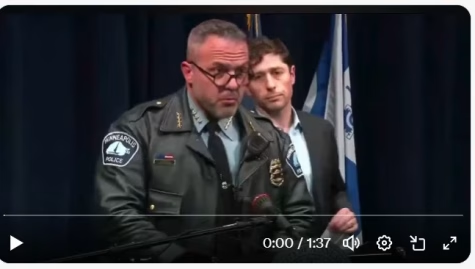
Minneapolis Police Chief Brian O’Hara explicitly stated that the crowd protesting the latest ICE-involved shooting had become an “unlawful assembly”, warning people to leave as some threw fireworks and rocks at officers, prompting tear gas and other crowd control measures. At a tense press briefing, O’Hara’s remarks underscored the violence and disorder on the streets, even as Mayor Jacob Frey appeared visibly frustrated and strained in posture toward O’Hara.
WATCH:
Traffic Stop Turns Violent: Attack Leads to Defensive Gunfire
According to DHS, after the initial struggle, two additional individuals emerged from a nearby apartment armed with a snow shovel and a broom handle and joined the confrontation against the federal officer. Faced with what the agency characterized as an ambush-style attack involving multiple assailants, the ICE officer fired “defensive shots,” striking the main suspect in the leg.
Local authorities confirmed the wounded man was transported to a hospital with non-life-threatening injuries, and the two others who allegedly assaulted the officer were taken into custody.
Video Footage Shows Federal Agents Forcing Entry
CNN obtained witness video showing the intense moment law enforcement entered the residence after the shooting. Long lines of federal vehicles can be seen approaching the home, followed by flash-bang devices, visible smoke, and powerful ramming sounds as officers breached the front door. One onlooker narrates in the footage, “They’re in! There’s more than a dozen of them.”
Minneapolis Already on Edge After Prior Shooting
This shooting occurred against the backdrop of an already volatile situation in Minneapolis. Just one week earlier, a U.S. citizen named Renee Nicole Good was fatally shot by an ICE agent during a separate enforcement action an event that sparked widespread protests, anger, and legal challenges from local officials.
In that January 7 incident, video and witness accounts showed the ICE agent firing multiple shots into Good’s vehicle as she attempted to move away. The aftermath led Minnesota’s attorney general and city leaders to question federal tactics and call for transparent investigations into the use of force by immigration agents.
Protests Erupt as Community Response Intensifies
The latest shooting quickly triggered protests in the North Minneapolis neighborhood. Demonstrators clashed with federal agents, throwing objects while officers deployed crowd control tools including flash-bang grenades and irritant sprays.
Minneapolis Mayor Jacob Frey condemned the escalating situation, calling the federal presence “not sustainable” and accusing the administration of inflaming community tensions with aggressive enforcement strategies. Police Chief Brian O’Hara also urged calm, emphasizing that further violence could only deepen divisions.
Local residents described a sense of fear and disruption caused by federal operations. One Minneapolis nurse said she was protesting because she feared for her neighbors’ safety, while another local claimed the federal agents had turned parts of the city into what felt like a “war zone.”
Federal Enforcement Strategy Under Scrutiny
The Minneapolis incidents are part of a larger federal initiative known as Operation Metro Surge, designed to intensify immigration enforcement in the Twin Cities. Multiple confrontations, arrests, and forceful entries have been documented since December, drawing growing criticism from civil rights groups and local authorities.
Minnesota officials, including the mayor and state attorney general, have taken legal action to try to halt this federal surge, arguing that it infringes on constitutional rights and endangers residents. Lawsuits filed against the U.S. government frame the operation as an “occupation” that undermines community trust and public safety.
What DHS and Federal Leaders Say
The Department of Homeland Security has defended the actions of ICE agents, framing the latest shooting as a necessary response to an attack on federal law enforcement personnel. DHS has emphasized that agents were enforcing immigration laws, and that the violence they encountered was unpredictable and dangerous.
Federal officials argue that maintaining law and order and removing individuals who are in the country unlawfully is a legal obligation, and that confronting violent resistance is part of that mission.
Escalation or Breakdown? National Debate Ignites
Critics of the federal response say the use of military-style tactics such as flash-bangs, mass deployments of agents, and aggressive entries into homes in urban neighborhoods only heightens conflict rather than promoting public safety. Civil liberties advocates have raised alarms about potential overreach and the risk of harming innocent residents in the process.
As Minneapolis enters yet another night of protests and calls for accountability, the debate over immigration enforcement, federal authority, and local governance continues to deepen. With national attention focused on the city, tensions between federal and local leaders show no signs of cooling, and both sides are preparing for possible legal and political battles in the weeks ahead.